

Sewing with Wovens: Tips for Success
If you're new to sewing with woven fabrics, you may be wondering if they require different techniques than quilting cottons.
The good news? Wovens aren't difficult to sew with. A lot of quilters, and especially garment sewists, probably have experience with wovens already (think Shot Cottons or Essex Linen), but there are a few things that can make the process smoother and more enjoyable. Since Handloom has arrived and is a woven fabric, I wanted to share some tips and tricks for working with it!
Prewash First
I prewash everything, and I especially recommend prewashing Handloom and other wovens. Washing helps tighten the weave, reduces fraying, and makes the fabric softer, and easier to cut and handle.
You absolutely can prewash precuts like fat quarters, but you should NOT prewash anything smaller like charm squares or jelly rolls. You will regret all your life choices if you do this.
I prewash smaller cuts like fat quarters in garment bags and I always clip the corner (like you'd clip off a dog-ear when sewing) to prevent unraveling in the wash. You don't need to do crazy things like pink the edges of all your fabrics or sew a stay-stitch all the way around the fabrics. I prewash like a madwoman, but I am a sane madwoman.

Use a Sharp Needle and Fresh Blade
This is good advice for any sewing project, but especially when working with textured woven fabrics.
A fresh rotary blade will give cleaner cuts, and a sharp sewing machine needle will help ensure smooth, accurate stitching.
I know it's hard to remember when the last time you changed both of those essential sewing tools is. Trust me, if I had a foolproof way to keep track, I'd tell you. Mostly, when things start going poorly, my machine sounds louder, my stitches look weird, or my rotary blade keeps leaving behind that one uncut thread, I change them!
Don't Be Afraid to Add Starch
Many quilters love the stability that starch provides when piecing, and I think this is why a lot of folks don't prewash. I personally have a love/hate relationship with the way fabric feels fresh off the bolt (I hate the feeling, but I like the stability).
After prewashing Handloom, you can absolutely add starch back into the fabric. I do this myself. This gives you the best of both worlds: it tightens up the weave after washing and stiffens the fabric, making it easier to piece with.
Add starch before you cut your fabrics to maximize accuracy.
Expect Some Fraying
Most woven fabrics fray more than standard quilting cottons, particularly before washing. This is totally normal. Don't be afraid if you don't have a lot of experience with fabrics outside of quilting cottons. Remember, even some of our favorite solid brands have a tendency to fray more than others.

Wovens Aren't Just for Quilts
While many quilters discover woven fabrics through quilting, I think all of you who dabble or excel in making other sewn projects know they're incredibly versatile.
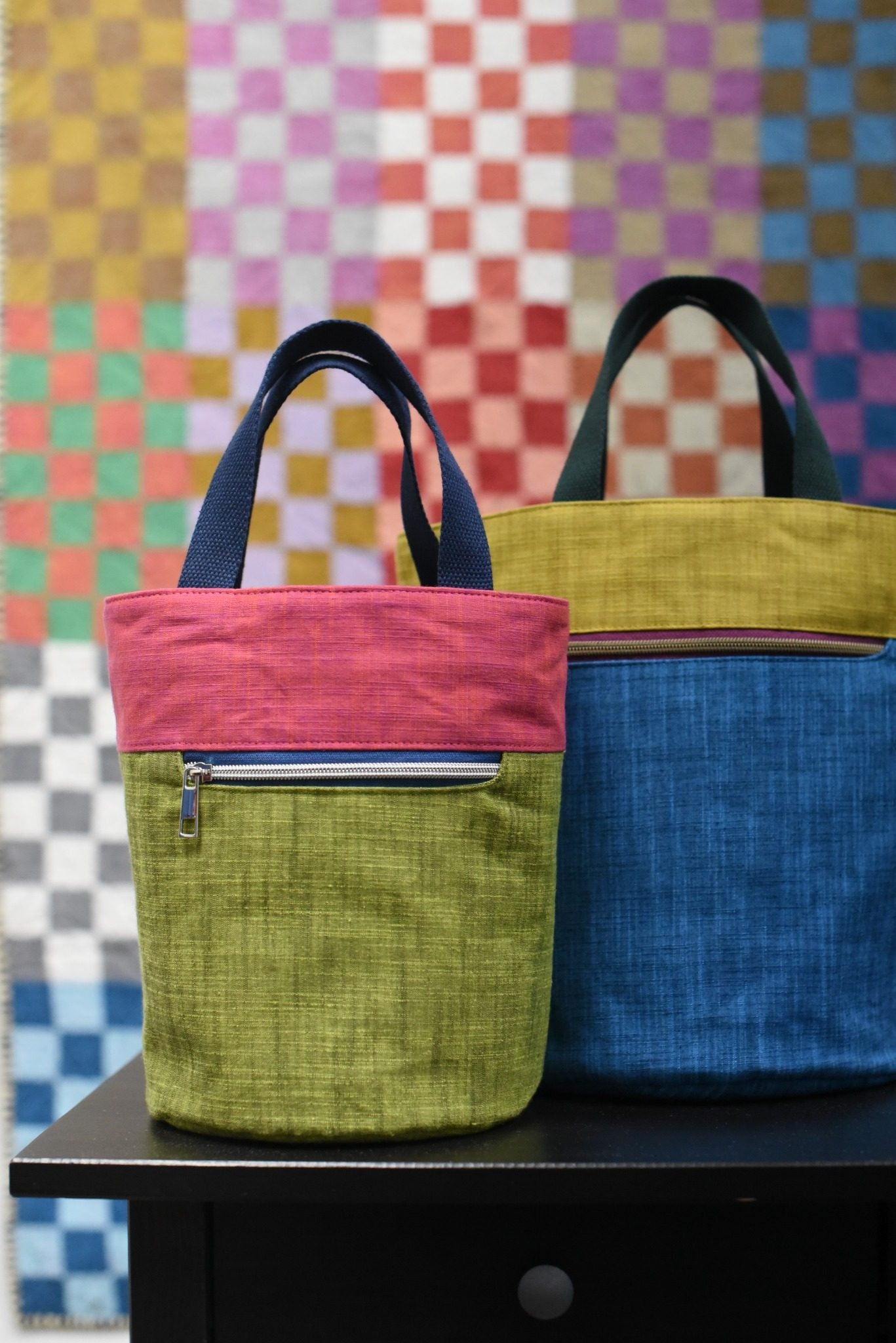
Handloom and other wovens work beautifully for quilts, but they're equally at home in garments, bags, pouches, and other sewing projects. In fact, garment sewists have been prewashing woven fabrics long before quilters started talking about it because you have to or your clothes won't fit right! So I'm told. I don't sew many three-dimensional objects!

Keep an Eye on the Grainline
One of the things I love about Handloom is its visible texture and strong grainline. Because the weave is more pronounced than a typical solid quilting cotton, it's easy to see when the fabric isn't quite square.
If the fabric looks a bit skewed, try giving it a gentle tug on opposite corners to help straighten the grain. Then smooth it out on your cutting mat and square it up if needed before cutting your pieces.
I don't spend a lot of time fussing over this, but a quick check can help keep your cuts accurate, especially when working with larger pieces. The good news is that the strong grainline is also one of the things that makes Handloom so beautiful! The texture and variation are part of its charm.
Final Thoughts
If you've never sewn with wovens before, don't overthink it! Feel free to mix it in with all your other fabrics, as the woven textures play beautifully with others!
Prewash your fabric, use sharp tools, and enjoy the extra texture and color variation woven fabrics bring to a project. A few small adjustments are often all it takes to make sewing with wovens feel just as normal as sewing with quilting cottons.


