

My Quilt Bled Bright Pink… and Here’s How I Fixed It
If you read my previous post about pre-washing, you already know I’m a diehard pre-washer, which helps avoid dye bleed issues among other things in my quilts.
So naturally, I had a full blown fabric bleed situation in my own studio a couple years back when I was preparing my quilts to go to QuiltCon for my exhibit as the Keynote Speaker.
I was in the middle of blocking a handful of quilts for the show, which I always do for any quilt that's going to hang because it makes them nice and square.
The Quilt That Caused the Drama
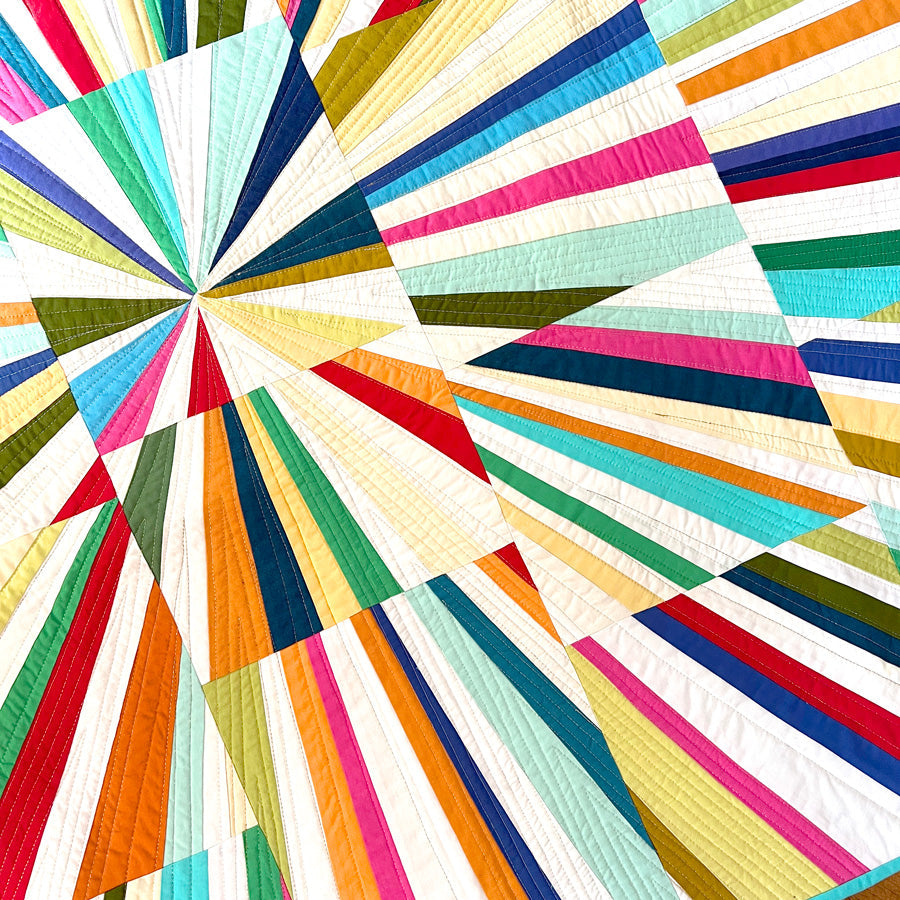
My Fireworks quilt is a little older and and I honestly don’t remember every detail about how I made it. I do know I was pre-washing fabric at that point, but I also know for a fact that once the quilt was finished, I never washed it.
So when it came time to block it, I didn’t think twice. It went into the washing machine looking just fine, and came out looking just fine.
I pinned it to dry on my foam tiles and left it overnight. In the winter, it usually takes a few days for a quilt to fully dry, so I knew it might be in there for a couple days and I figured my biggest challenge would be keeping the cats from laying on it until then.
But when I walked into my studio the next morning, it was bad.
One of the fabrics had bled leaving a shocking pink stain all over the lighter fabrics.
Time was already pretty tight in terms of me getting ready for QuiltCon. I had more quilts to block, I was anxiously finalizing my keynote speech and I figured at this point, Fireworks was not going to the show. But I took to Instagram to ask for help from the people I knew would have the best answers, fellow quilters!
The two most common recommendations? Zout and Blue Dawn dish soap.

What Didn’t Work
I started with Zout.
I sprayed it on, scrubbed lightly, and tried not to panic about damaging the fabric while scrubbing. Unfortunately, it didn’t remove the dye.
If anything, it made one small area worse, which yes, I know seems hard to believe.
What Actually Worked
Next up was Blue Dawn.
If it can clean oil off a seabird, I figured it might have a shot at pulling hot pink dye out of white fabric. So I filled the tub with warm water, added about half a cup of Dawn, and let the quilt soak for a couple of hours. The water turned pink pretty quickly, which felt promising. Then I drained it, refilled the tub, added more Dawn, and did it all over again.
Total soak time was about four hours.
At that point, I figured I had done everything I could and it was time to rinse everything out.

The Plot Twist
As I was putting the quilt back into the washing machine, I remembered something my mom always does when she washes quilts: She adds a little bit of Dawn to the wash.
So I added about two tablespoons, ran a warm wash, did an extra rinse. and pinned it back down to dry.
The Result
The next morning, I held my breath as I opened the studio door.
It worked! The dye was almost completely gone.
The only place where there was still a faint pink tinge was the area where I had used Zout. So in this case, it seems like the Zout actually set the stain a bit. And honestly, I’m okay with that. Quilts are not meant to be perfect. That little bit of pink is part of the story now. A faint reminder of near disaster.

What I Learned
I’ve blocked a lot of quilts and never had this happen before, especially with pre-washed fabric.
My best guess is that it was a combination of a particularly active dye, maybe one fabric that didn’t get pre-washed, and not using any soap in the initial wash.
What I do know is this: I now always add a little Blue Dawn to my washes whether I’m pre-washing yardage or blocking a finished quilt. Maybe it works. Maybe it's superstition, I know it saved this quilt and it's worked for me for the last two years and lets me sleep at night when I'm blocking a newly beloved quilt in the studio.
What If You Didn't Prewash?
My horror story, isn't meant to scare you, but it is meant to remind you to take care when you wash your quilts (and maybe to convince you to prewash at least some things when possible). We spend a lot of time cutting up fabric and sewing it back together in an act of art, creativity, escape, grief, joy & community.
I have worked in-house at Michael Miller and in partnership with Windham creating my own fabric line, Handloom, and there is a tremendous amount of testing and care that goes into creating fabrics to ensure there is minimal to no bleeding when those fabrics are washed. And there is still dye involved in making those fabrics; and not all fabrics and all colors behave in the same ways.
When you start mixing fabrics from different manufacturers, especially wovens, shot cottons, or found fabrics, there's more opportunity for colors to run, even if only slightly. Reds and dark colors are the ones I watch most closely.
It's one of the reasons I prewash everything religiously, and why I strongly recommend prewashing Handloom and other woven fabrics even if you aren't firmly in the pre-washing camp. Beyond rinsing out excess dye, washing wovens helps tighten the weave, reduce fraying, and make the fabric softer and easier to handle. Love starch? Add it back in at the ironing board, I do!
But what if you've already made your quilt and didn't prewash your fabrics? Or what if you love using pre-cuts like charm squares and jelly rolls that can't be prewashed?
If you're washing a finished quilt for the first time and you're concerned about dye bleeding or you've mixed substrates, here are a couple of extra precautions I'd take:
- Only wash a finished quilt. Do not wash a finished quilt top or a pieced back. You are only asking for fraying and trouble. If you started it, finish it first.
- Use Dawn dish soap from the beginning. Rather than waiting until you discover a problem, you can use Dawn as part of your first wash to help remove excess dye. I use two tablespoons and a warm wash.
- Use multiple Color Catchers. These little sheets can help absorb loose dye in the wash water before it can settle onto other fabrics. I wouldn't rely on just one, especially if you've used lots of different colors (especially darks) and substrates.
-
Move it to the dryer immediately. Remove your quilt or fabric (if pre-washing) from the washing machine at the end of the wash cycle immediately and dry it to avoid color transfer.
These aren't guarantees that your fabrics won't bleed, but they're extra precautions worth taking.
I've had other recommendations including using vinegar in the wash or dry cleaning to set fabric dyes. That's not something I have experience with or I'd count on. In my research, these do not necessarily make a fabric colorfast, and some dyes can even bleed during the dry-cleaning process.
Like I mentioned, in my research I did find a suggestion that you should remove your quilt or fabric (if pre-washing) from the washing machine at the end of the cycle as soon as possible as color transfer is more likely to take place as the wet items lay close together.
This may have contributed to the dye bleed in my Fireworks quilt coming out of the machine looking okay vs. after it sat damp and bled as part of blocking.
For me, prewashing is still the easiest way to eliminate as much of that risk as possible before I put all that time into making a quilt.
I understand that some of us have an epic stash and it may, as my Ops Manager Chelsea says, be too late to go back and do all that laundry now. Even I have almost converted her so when she buys new fabric for a project, she pre-washes it and if she's pulling fabric for a project she will prewash it vs. committing to a full wash of her meticulously folded stash. Ha!
I hope this was an inspiring and helpful story of what to do when disaster strikes and how to prevent it.


